
Choosing the right abrasive grain size for polishing is essential for achieving the desired surface finish without unnecessary material removal, processing time, or cost. Coarser abrasives are generally used for initial grinding and scratch removal, while finer abrasives help refine the surface during later stages. However, the ideal particle size depends on the workpiece material, the starting surface condition, the polishing method, and the finish required.
When I evaluate an abrasive for a polishing application, I do not look at grit size alone. The abrasive material, particle-size distribution, grain shape, equipment, and processing conditions all influence the final result. A powder that works well for polishing one material may be unsuitable for another, even if both applications require a fine surface finish.
In this guide, I will explain how to choose an appropriate abrasive grain size for polishing, how grit numbers differ from micron measurements, and what industrial buyers should check before placing an order. I will also compare white fused alumina and silicon carbide, two important abrasive materials used in fine grinding and surface finishing.
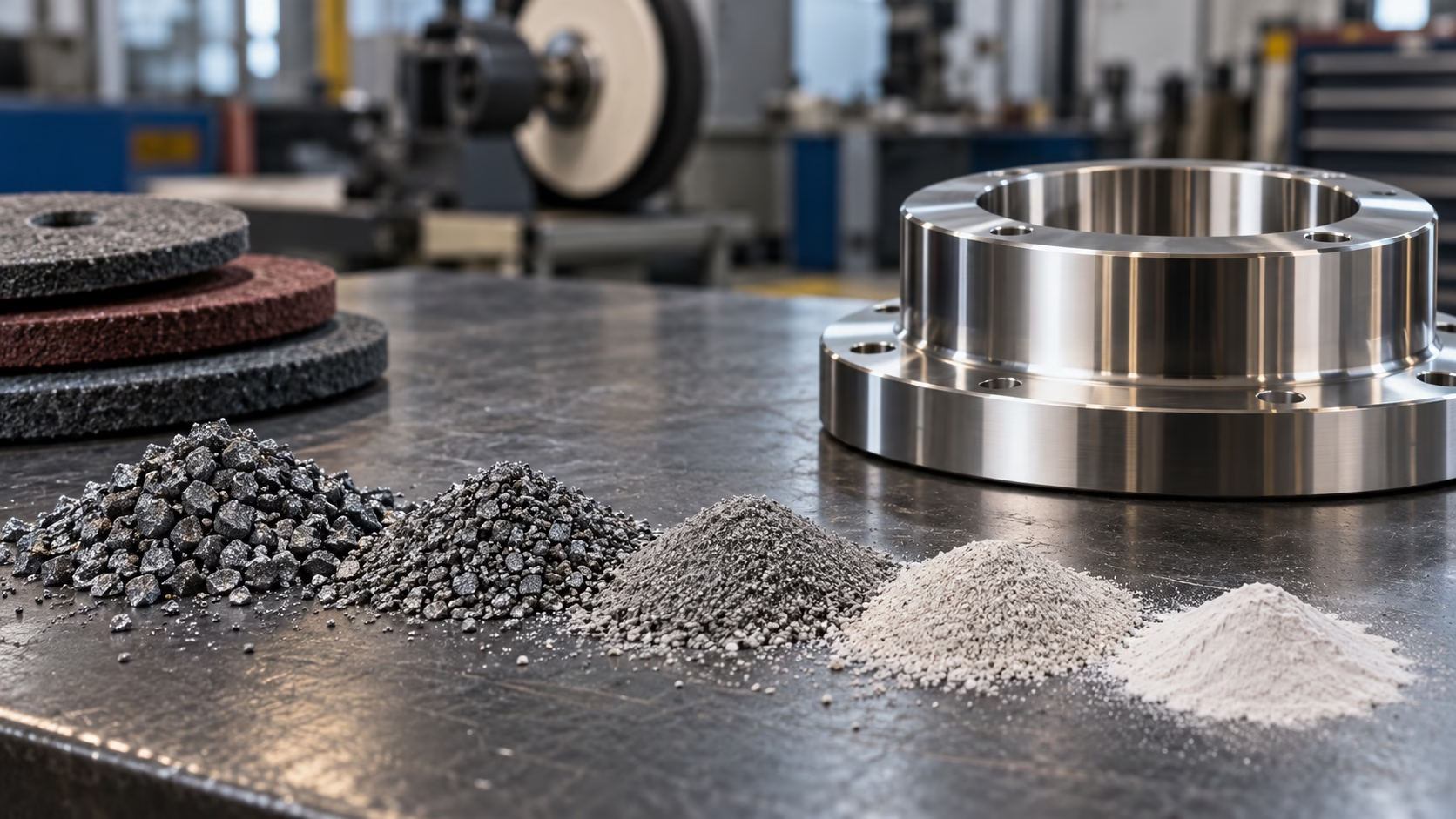
1. What Does Abrasive Grain Size Mean in Polishing?
Abrasive grain size describes the size classification of particles used to remove material from a workpiece. During polishing, abrasive particles interact with the surface to remove microscopic amounts of material, reduce scratches, and improve surface appearance. The appropriate size depends on how much material must be removed and how smooth the finished surface needs to be.
Coarse, Medium, and Fine Abrasives
Coarse abrasives are typically used during initial grinding or surface preparation, when the objective is to remove material, eliminate visible defects, or level an uneven surface. Medium abrasives help reduce the deeper scratches left by the previous stage, preparing the workpiece for finer finishing. Fine abrasives are then used to refine the surface and achieve the finish required by the application.
Not every polishing process requires all three stages. A relatively smooth workpiece may need only a short finishing sequence, while a component with deep scratches may require several progressively finer grades. The important principle is to select each abrasive according to the condition of the surface and the objective of the next processing step.
Why Smaller Particles Do Not Always Produce Better Results
Smaller abrasive particles can help produce finer surface finishes, but choosing the finest available powder does not automatically deliver the best result. If the starting surface contains deep scratches, a very fine abrasive may remove material too slowly to correct them efficiently. Conversely, using an abrasive that is too coarse during the final stage can introduce scratches that are difficult to remove.
I recommend treating polishing as a controlled sequence rather than a simple search for the smallest particle size. Grain shape, abrasive hardness, applied pressure, polishing pad, lubricant, and workpiece properties all influence the outcome. For a broader introduction to abrasive materials and their applications, see our guide to what abrasive grain is and how it works.
2. What Abrasive Grain Size Should You Use for Polishing?
The right abrasive grain size depends on the amount of material that needs to be removed, the condition of the workpiece, and the required surface finish. There is no single grit or micron size that works best for every polishing application.
The following table provides a practical starting point for selecting an abrasive. These categories describe general processing stages rather than universal particle-size specifications.
| Polishing stage | Main objective | Selection considerations |
|---|---|---|
| Initial grinding | Remove major defects and excess material | Choose a sufficiently aggressive grade for the starting surface |
| Intermediate finishing | Reduce scratches left by initial grinding | Match the grade to the previous stage and workpiece material |
| Fine polishing | Refine the surface and reduce visible scratches | Use a finer grade compatible with the required finish |
| Precision polishing | Achieve controlled surface quality | Consider particle-size distribution and oversized-particle limits |
| Final finishing | Meet application-specific appearance or surface requirements | Validate the complete process rather than relying on grit size alone |
Choosing Particle Size by Workpiece Material
For metals, I would consider the material’s hardness, initial surface condition, and susceptibility to scratching or contamination. Stainless steel, for example, may require a different finishing sequence from softer non-ferrous metals. The abrasive must remove the existing defects without introducing scratches that compromise the final appearance or function.
Glass and technical ceramics require particular attention because their hardness and brittle behavior can make surface damage difficult to correct. The appropriate abrasive depends on the material, the shape of the component, the grinding or polishing method, and the quality requirements. For precision components, controlling the particle-size distribution may be just as important as choosing the nominal grade.
Stone and engineered materials present different challenges. Their surface structure, porosity, and intended finish can influence whether a particular abrasive grade is suitable. I would therefore establish the required result first and then select the abrasive material and size through technical review and, when necessary, sample testing.
Match the Abrasive to the Entire Process
Abrasive selection should account for the complete finishing sequence. Each stage needs to remove the defects left by the previous stage without creating unnecessary new damage. If the abrasive transition is poorly chosen, the polishing process may take longer or produce inconsistent results.
For industrial buyers, the most useful question is not simply, “What is the finest abrasive available?” Instead, ask, “What particle size and material can achieve my target finish efficiently and consistently?”
3. 
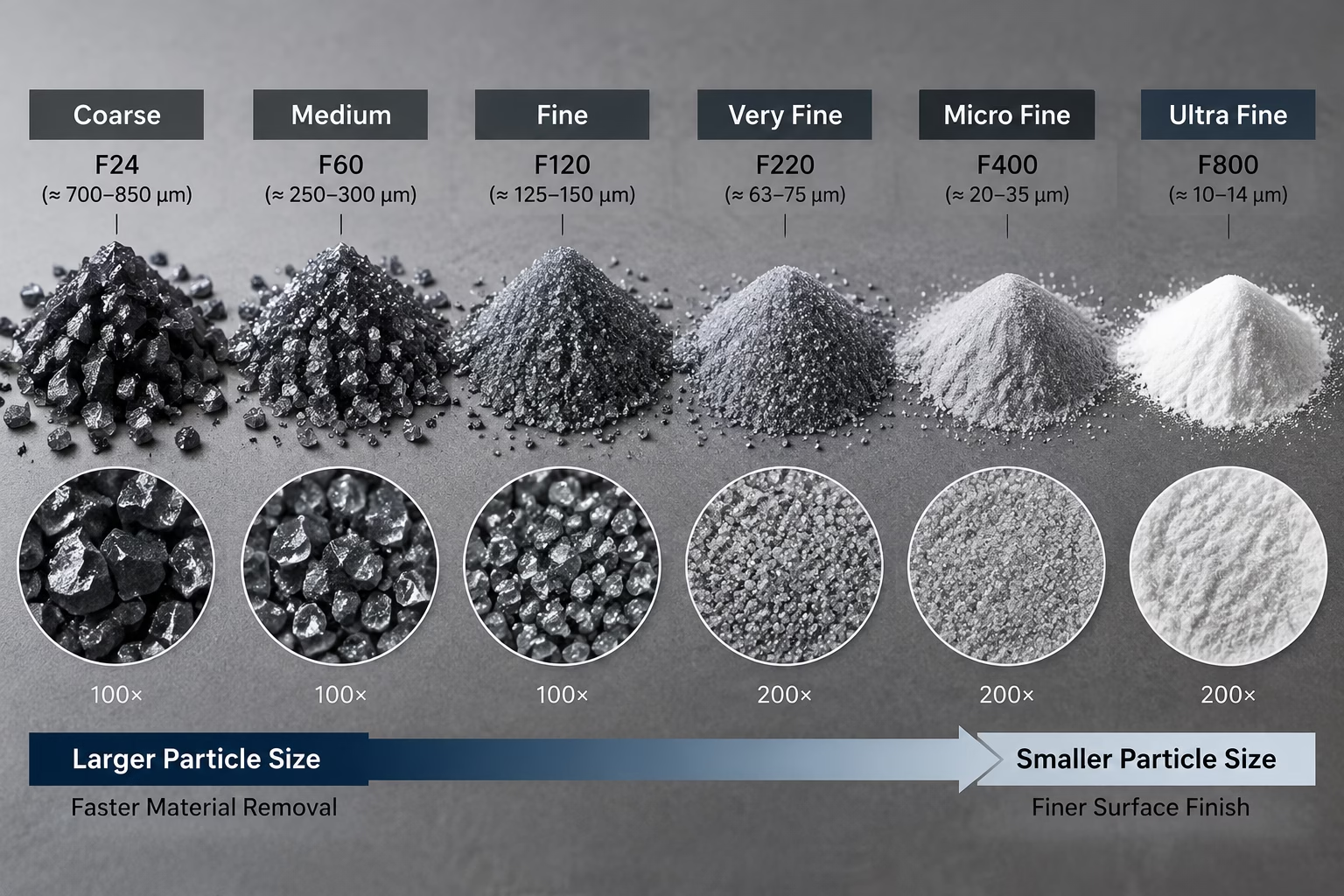
One of the most common sources of confusion in abrasive purchasing is the difference between grit numbers, mesh sizes, and micron measurements. These terms describe particle size in different ways, and they should not be treated as interchangeable without checking the relevant grading system.
What Is the Difference Between Grit and Micron?
Grit is a grade designation defined by a particular abrasive classification system. A micron, or micrometer, is a unit of length: 1 micron equals 0.001 millimeter. Mesh traditionally refers to the number of openings per linear inch in a sieve, although the actual opening size also depends on the sieve specification.
A grit number does not necessarily represent one exact particle diameter. Depending on the standard, a grade may be defined by a specified particle-size distribution. Similarly, a micron-based product specification may describe D50, an upper particle-size limit, or another distribution parameter.
For this reason, I would not convert a grit number into a micron value using a generic chart unless the applicable standard and conversion basis are clear. Buyers should confirm what the number actually represents before comparing products from different suppliers.
Why FEPA and ISO Standards Matter
The FEPA abrasive standards provide a reference for understanding abrasive grading systems. FEPA distinguishes between F-grit sizes used for bonded abrasives and P-grit sizes used for coated abrasives. A matching number in these two systems should not automatically be assumed to represent identical particle-size requirements.
For finer aluminum oxide and silicon carbide abrasives, ISO 8486-2:2007 specifies methods for determining or checking the particle-size distribution of microgrits F230 to F2000. Its scope includes fused aluminum oxide, silicon carbide, and loose grits used in polishing. The ISO page states that the standard was reviewed and confirmed in 2021. Buyers should check the official record for any subsequent status updates before finalizing a specification.
These standards are particularly relevant when purchasing abrasives for industrial production, where consistency between batches matters. For a more detailed explanation of grading systems, read our guide to abrasive grain sizes explained: FEPA, ANSI, and JIS.
4. Choosing the Right Abrasive Material for Polishing
Particle size is only one part of the selection process. The abrasive material itself also influences cutting behavior, surface quality, contamination risk, and overall processing cost. White fused alumina and silicon carbide are two important options, but their suitability depends on the application.
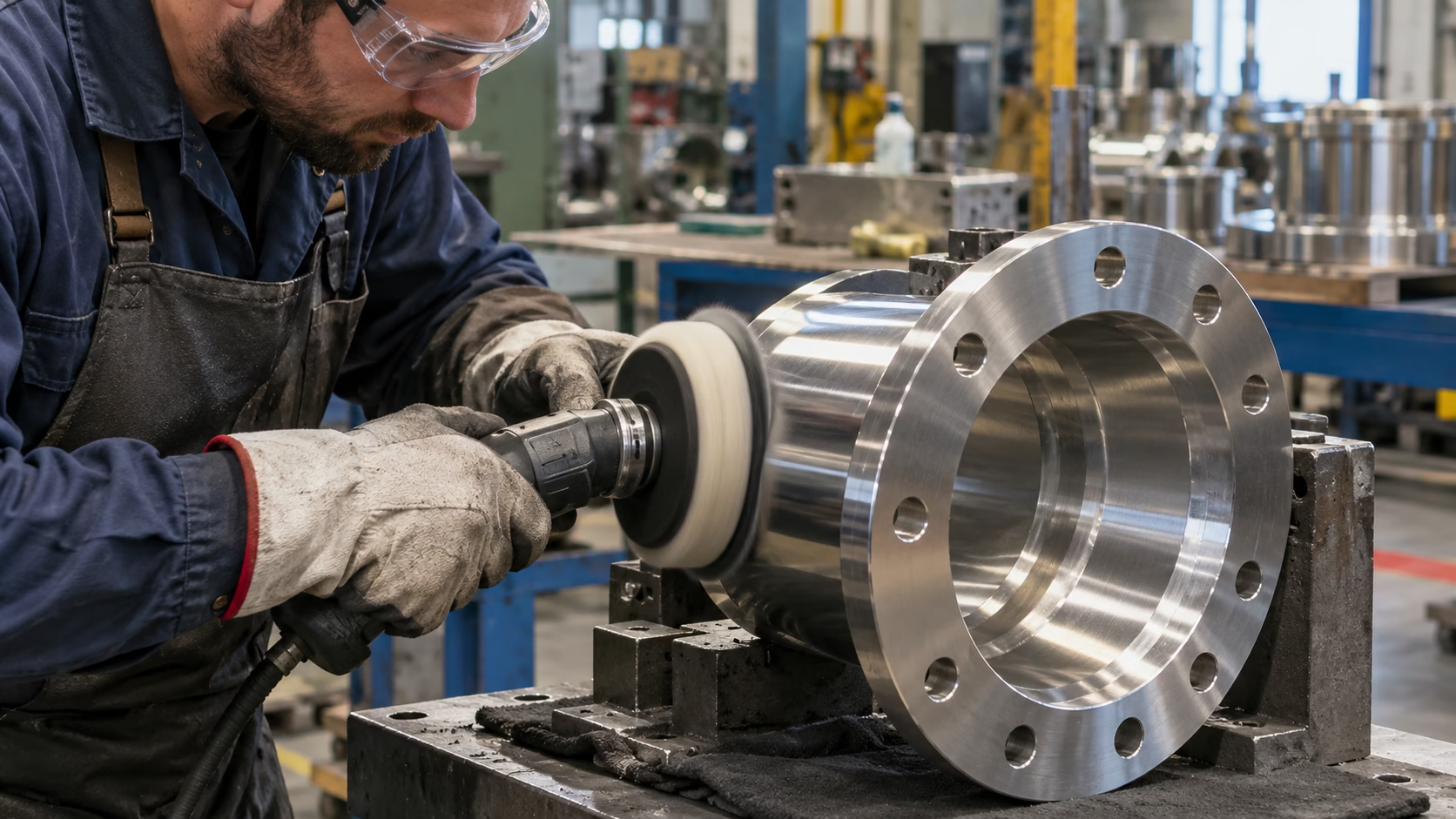
Aluminum Oxide for Polishing
White fused alumina (WFA) is a synthetic aluminum oxide abrasive known for its high purity, hardness, and sharp cutting characteristics. It is used in various grinding, finishing, lapping, and polishing applications where its material properties match the process requirements.
When evaluating white fused alumina powder, I would check the specified grade, particle-size distribution, and purity requirements rather than relying on the product name alone. Precision applications may also require limits on oversized particles and other contamination controls.
YUMO supplies white fused alumina powder and micro powder for industrial applications. Buyers should confirm the available grade and its suitability for their particular polishing process before ordering.
Silicon Carbide for Fine Grinding and Polishing
Silicon carbide (SiC) is a hard synthetic abrasive with sharp cutting characteristics. It is widely used in processing glass, ceramics, stone, and other hard or brittle materials. Depending on the application, it can be supplied as abrasive grains, fine powder, or micro powder.
Black and green silicon carbide are not interchangeable in every situation. Their suitability depends on the material specifications, purity requirements, processing conditions, and cost considerations. I would compare the actual technical data and intended use before selecting one over the other.
For more information, see YUMO’s guide to silicon carbide abrasive properties, uses, and selection.
Why Particle-Size Distribution Matters
Two powders with the same nominal grade may not produce identical results if their particle-size distributions differ. In precision polishing, oversized particles can introduce unwanted scratches, while an unsuitable distribution may affect cutting behavior and processing consistency.
For demanding applications, buyers should ask whether the supplier can provide particle-size data, the measurement method, and any relevant maximum-particle limits. These details are especially important when a powder is used on sensitive surfaces or within a tightly controlled production process.
5. How I Select the Right Abrasive Grain Size for Polishing
When I evaluate an abrasive for polishing, I start with the surface condition I need to achieve rather than the smallest particle size available. The goal is to remove existing defects efficiently while preparing the surface for the next stage, without adding unnecessary processing time or cost.
First, I identify the workpiece material and its initial condition. A surface with deep scratches requires a different approach from one that only needs final finishing. Next, I define the required result, whether that means improved appearance, reduced roughness, dimensional control, or a specific customer-defined finish.
I then select the abrasive material and grade based on the workpiece, equipment, and processing method. Finally, I confirm the specification and determine whether a sample test is needed. This process helps avoid the common mistake of choosing a product based on its name or price without confirming its suitability.
Polishing Abrasive RFQ Checklist
When requesting a quotation, I recommend providing the following information:
| Specification | What to provide |
|---|---|
| Workpiece material | Metal, glass, ceramic, stone, or another material |
| Abrasive type | White fused alumina, silicon carbide, or another specified abrasive |
| Particle size | Grit grade or micron-based requirement |
| Standard | FEPA, JIS, ISO, or customer-specific specification |
| Application | Grinding, lapping, polishing, or final finishing |
| Quality requirements | Purity, distribution, oversized-particle limits, or other controls |
| Packaging | Required bag size or bulk packaging |
| Quantity | Trial sample, initial order, or expected regular volume |
A detailed RFQ helps suppliers recommend an appropriate product and reduces the risk of ordering a grade that does not match the actual process. For precision applications, I would also request a technical data sheet and confirm how particle size is measured.
Conclusion: Find the Right Abrasive Grain Size for Polishing
Choosing the right abrasive grain size for polishing requires more than selecting a fine grit or micron value. The abrasive must match the workpiece, the initial surface condition, the finishing method, and the required result. Grit designation and particle-size distribution should also be checked carefully, particularly when sourcing materials across different standards or suppliers.
For industrial buyers, I recommend specifying the material, grading system, particle-size requirement, application, and quality controls before placing an order. When the application is demanding, technical documentation and sample testing can help confirm that the selected abrasive is suitable.
Need Abrasive Materials for Polishing? YUMO Can Help
YUMO supplies white fused alumina, brown fused alumina, and silicon carbide in different grain and powder grades for industrial applications. If you are sourcing abrasive materials for polishing, fine grinding, or surface finishing, share your workpiece material, target particle size, required grading standard, application, and estimated quantity with our team.
We can discuss available specifications and help you identify a suitable abrasive grade for your process. Whether you need white fused alumina micro powder for a fine finishing application or silicon carbide for processing hard materials, the selection should be based on your actual technical requirements rather than a generic product description.
Contact YUMO to discuss your polishing abrasive requirements and request product specifications or a quotation.


