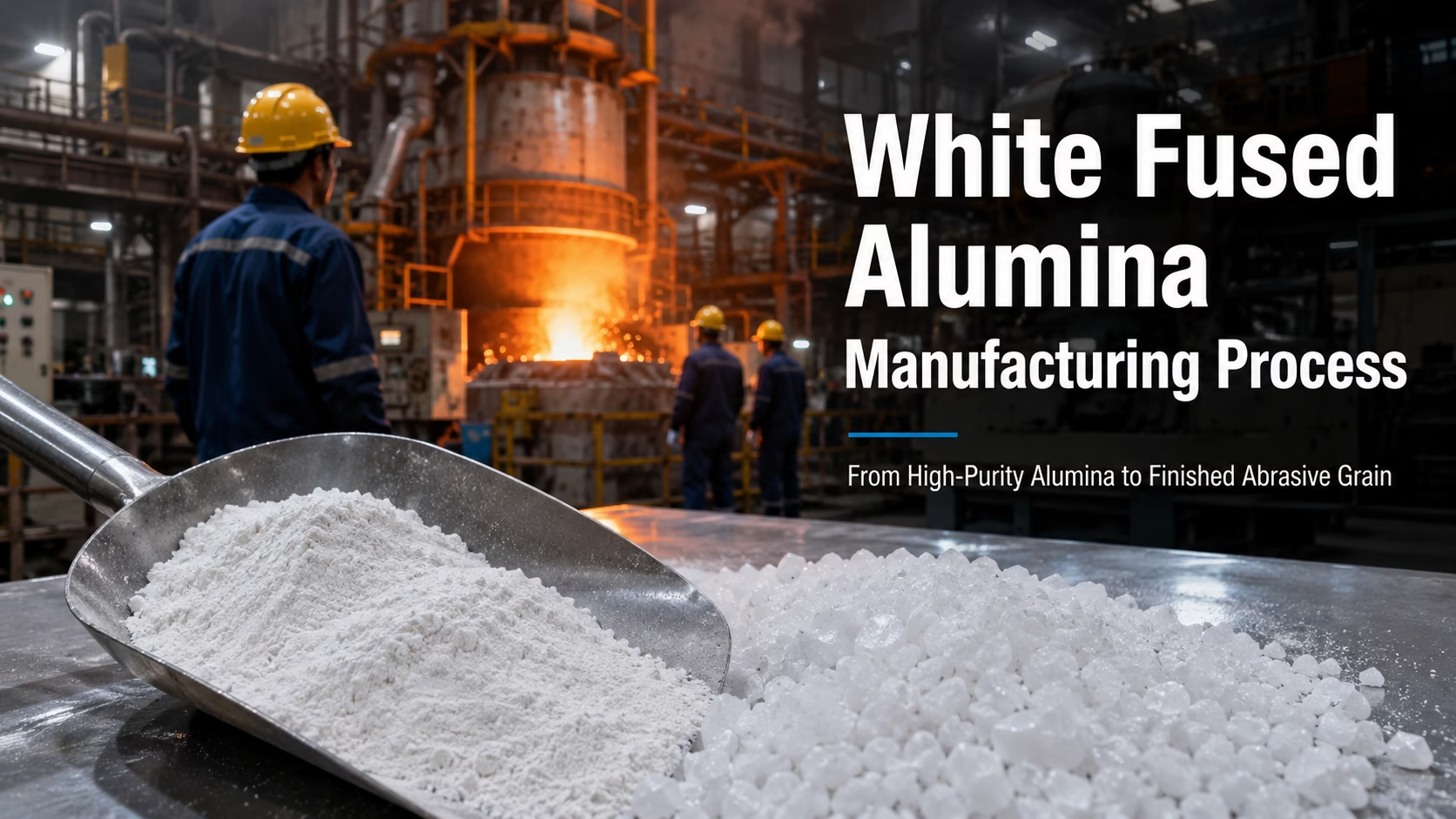
白色電融アルミナ may look like a simple white abrasive grain or powder, しかし、一貫した工業グレードの製品を生産するには、慎重に制御されたいくつかのステップが必要です.
の white fused alumina manufacturing process normally includes raw material selection, electric arc furnace melting, cooling, 粉砕する, magnetic separation, washing, particle-size classification, quality testing, and packaging.
As a manufacturer and supplier specializing in white fused alumina, we know that each production stage can affect purity, grain shape, particle-size distribution, cutting performance, and batch consistency.
In this guide, we explain how white fused alumina is made and what industrial buyers should check when selecting a supplier.

白色電融アルミナとは?
白色電融アルミナ, also known as white aluminum oxide or white corundum, is a synthetic abrasive material produced from high-purity alumina.
The alumina is melted at extremely high temperatures in an electric arc furnace. After cooling and solidification, the fused material is crushed and processed into different grit sizes and micro powders.
White fused alumina is commonly selected for applications requiring:
- 高硬度
- High aluminum oxide content
- Low iron contamination
- Good chemical stability
- Sharp cutting edges
- Controlled friability
- Clean surface finishing
Typical applications include grinding wheels, コーティングされた研磨材, サンドブラスト, 精密研削, 研磨, refractory products, セラミックス, and investment casting.
白色電融アルミナの製造工程
Although equipment and processing methods may vary between manufacturers, the production process usually includes the following stages.
1. Selecting High-Purity Alumina
The process begins with high-purity alumina, usually Bayer alumina.
This is an important difference between white fused alumina and brown fused alumina. Brown fused alumina is generally produced from calcined bauxite, while white fused alumina uses a much purer alumina raw material.
Before production, the alumina should be inspected for:
- Al₂O₃ content
- Sodium oxide
- Iron oxide
- Silicon dioxide
- Moisture
- Particle consistency
- Other trace impurities
Raw material quality directly affects the purity, whiteness, crystal structure, and performance of the finished abrasive.
At Henan Yu Mo, we focus on controlling the raw material and finished-product chemistry because stable incoming alumina is essential for maintaining consistent white fused alumina quality.
2. Melting in an Electric Arc Furnace
The alumina is charged into an electric arc furnace and heated to temperatures above approximately 2,000°C.
At this temperature, the alumina melts and forms a fused aluminum oxide material.
During the melting process, the manufacturer must control:
- Furnace temperature
- Electrical power
- Electrode position
- Charging speed
- Melting time
- Furnace cleanliness
- Melt uniformity
Poor furnace control can result in unmelted material, inconsistent crystal formation, contamination, or variations between production batches.
For industrial buyers, this means white color alone is not enough to judge quality. Chemical analysis, bulk density, grain shape, and application performance are also important.
3. Cooling and Solidification
After melting, the liquid alumina is cooled and solidified into a large fused block.
The cooling process influences the internal crystal structure of the material. This can affect:
- Grain toughness
- Friability
- Crystal size
- Crushing behavior
- Abrasive performance
White fused alumina used for grinding applications may require different grain characteristics from material used in refractory or investment-casting applications.
A reliable manufacturer should therefore adjust its production and processing methods according to the intended use of the material.
4. Crushing the Fused Alumina Block
Once the fused block has cooled, it is broken into smaller pieces.
The material may pass through several crushing stages using equipment such as jaw crushers, roll crushers, impact crushers, or other industrial crushing systems.
Crushing does more than reduce particle size. It also affects the shape of the abrasive grain.
Depending on the equipment and processing method, the finished grains may be:
- Blocky
- Sharp-edged
- Elongated
- Dense
- More friable
Grain shape influences how white fused alumina performs in grinding wheels, コーティングされた研磨材, blasting equipment, and polishing systems.
Two products with similar chemical composition may still perform differently if their grain shapes and particle distributions are not the same.
5. Magnetic Separation and Washing
During crushing and material handling, small amounts of metallic contamination may enter the product.
Magnetic separation equipment is therefore used to remove iron-bearing particles from the white fused alumina.
This step is especially important for applications such as:
- Stainless-steel blasting
- Precision polishing
- Electronic ceramics
- Investment casting
- High-purity refractory materials
- Sensitive surface treatment
Some grades are also water-washed or acid-washed to remove dust, soluble residues, surface contamination, and fine particles.
しかし, not every application requires acid-washed white fused alumina.
The correct cleaning method depends on the customer’s requirements for iron content, surface cleanliness, conductivity, pH, and chemical purity.
6. Drying and Particle-Size Classification
After washing, the material must be thoroughly dried before final classification.
White fused alumina is then separated into different grit sizes using screening, air classification, sedimentation, or other precision-classification methods.
Coarser abrasive grains are commonly classified using industrial sieves. Fine white fused alumina micro powders require more accurate equipment because very small particles cannot be separated effectively by ordinary screening alone.
Common product forms include:
- Macrogrits
- Microgrits
- Fine powders
- Refractory aggregates
- Customer-specific particle distributions
Depending on the application, buyers may request:
- FEPA F grades
- FEPA P grades
- JIS grades
- Mesh sizes
- Micron sizes
- D10, D50 and D90 values
We recommend that buyers specify the required grading standard instead of ordering only by a general term such as “240 grit” or “1,000 mesh.”
Different standards may represent different particle-size distributions.
7. Quality Testing
Before packaging, the finished white fused alumina should be tested to confirm that it meets the required specification.
Typical quality-control items include:
化学組成
- al₂o₃
- Na₂O
- Fe₂O₃
- SiO₂
- TiO₂
物理的性質
- Particle-size distribution
- Bulk density
- Magnetic content
- Moisture
- 粒形状
- Flowability
- pH
- Electrical conductivity
The exact tests depend on the application.
例えば, a grinding wheel manufacturer may focus on grain shape, 靭性, and particle distribution. A precision-polishing customer may place greater importance on oversized-particle control, surface cleanliness, and D50 consistency.
At Henan Yu Mo, we supply white fused alumina grains and micro powders for different industrial uses. Product specifications can be discussed according to the buyer’s application, target grit size, packaging requirements, and quality-control needs.
8. Blending and Packaging
After testing, the classified material may be blended to improve batch uniformity.
The finished white fused alumina is then packed in suitable industrial packaging, such as:
- 20 kg or 25 kg bags
- 50 kg bags
- 500 kg bulk bags
- 1,000 kg bulk bags
- Moisture-resistant packaging
- Customized packaging
Each batch should be clearly labeled with information such as:
- Product name
- Grit size
- Batch number
- Net weight
- Production date
- Manufacturer information
Good packaging protects the material from moisture, foreign particles, damage, and cross-contamination during storage and transportation.
How the Manufacturing Process Affects Product Quality
Every stage of the white fused alumina manufacturing process affects the final product.
| Production stage | Main effect on WFA quality |
|---|---|
| Raw material selection | Purity, sodium content and whiteness |
| Electric arc furnace melting | Fusion quality and crystal formation |
| 冷却 | 靭性, crystal size and friability |
| 粉砕 | Grain shape and cutting characteristics |
| Magnetic separation | Metallic contamination |
| Washing | Surface cleanliness and dust content |
| 分類 | Particle-size consistency |
| Testing and blending | Batch stability |
| Packaging | Moisture and contamination protection |
For this reason, industrial buyers should not evaluate white fused alumina based only on price or Al₂O₃ content.
Particle-size distribution, grain shape, magnetic content, washing method, batch consistency, and actual application performance are equally important.
How to Choose a White Fused Alumina Supplier
Before approving a supplier, we recommend asking the following questions:
- Are you a manufacturer or trading company?
- What raw alumina is used?
- Which grit standards can you supply?
- Can you provide a certificate of analysis?
- How is particle size tested?
- Is the material magnetically separated?
- Are water-washed or acid-washed grades available?
- Can you customize particle-size distribution?
- What packaging options are available?
- Can you provide samples for testing?
- How do you control batch consistency?
- What is the normal production lead time?
A professional supplier should be able to explain its manufacturing process and provide technical information related to the customer’s specific application.
Why Work With Henan Yu Mo?
河南裕莫新素材有限公司, 株式会社. is a manufacturer and supplier of white fused alumina and other industrial abrasive materials in China.
Our main product range includes:
- 白色電融アルミナ
- White fused alumina micro powder
- 茶色の融合アルミナ
- 黒い融合アルミナ
- 黒色炭化ケイ素
- 緑色の炭化ケイ素
We focus particularly on white fused alumina grains and fine powders used in grinding, 研磨, 爆破, 結合した研磨剤, コーティングされた研磨材, 耐火物, セラミックス, and other industrial applications.
Final Thoughts
の white fused alumina manufacturing process includes much more than melting and crushing alumina.
Raw material control, furnace operation, cooling, grain shaping, magnetic separation, washing, classification, testing, and packaging all influence the final product.
For buyers, the best approach is to compare suppliers using complete specifications and application testing rather than price alone.
A reliable white fused alumina manufacturer should provide stable product quality, clear technical documentation, suitable particle sizes, responsive communication, and consistent long-term supply.