
Choosing an abrasive grain is not simply a matter of deciding between aluminum oxide and silicon carbide or selecting a grit number from a supplier’s catalog. In an industrial process, the abrasive has to work as part of a complete system that includes the workpiece material, 장비, 압력, 작동 속도, required surface finish and production target.
This is also why two factories can use different abrasive grains for jobs that appear similar. A grain that performs well in aggressive steel blasting may be unnecessarily expensive or too coarse for precision surface finishing. 비슷하게, an abrasive that gives an excellent finish may remove material too slowly for a high-volume production line.
For purchasing teams, the objective is therefore not to find the hardest or cheapest abrasive. It is to identify the combination of grain material, 입자 크기, grain characteristics and quality specification that delivers the required result at an acceptable total processing cost.
If you are still comparing the basic differences between abrasive materials, grain sizes and applications, start with our 연마 입자 란 무엇입니까?? 유형, 크기 & 응용 guide. This article goes a step further and focuses specifically on how industrial buyers can turn those technical differences into a practical purchasing decision.
Start With the Workpiece, Not the Abrasive
The first question should always be:
What material are you processing?
Abrasive selection becomes much easier once the workpiece is clearly defined. Carbon steel, 스테인레스 스틸, 알류미늄, 주철, 유리, ceramic and carbide behave differently during grinding or blasting, so they should not automatically be processed with the same abrasive.
Technical grinding-wheel selection guidance from established abrasive manufacturers also places the material being processed among the first factors that should be considered. Aluminum oxide is commonly used for many ferrous-metal applications, while silicon carbide is frequently evaluated for hard, 다루기 힘든, non-metallic and selected non-ferrous materials.
That is a useful starting point, but it should not be treated as an absolute rule. The exact selection still depends on hardness, heat sensitivity, required finish, grinding pressure and equipment.
예를 들어, a buyer grinding ordinary carbon steel may begin by evaluating aluminum oxide, while a company processing glass or technical ceramics is more likely to investigate silicon carbide or another hard, sharp abrasive. Stainless steel applications may require additional attention to contamination, heat generation and grain performance.
Before contacting a supplier, record at least the following information:
- 공작물 재료
- Workpiece hardness, if known
- Current abrasive being used
- Current grit size
- Wet or dry processing
- Required material removal
- Required final surface condition
These details are much more useful than asking a supplier simply for “the best abrasive grain.”
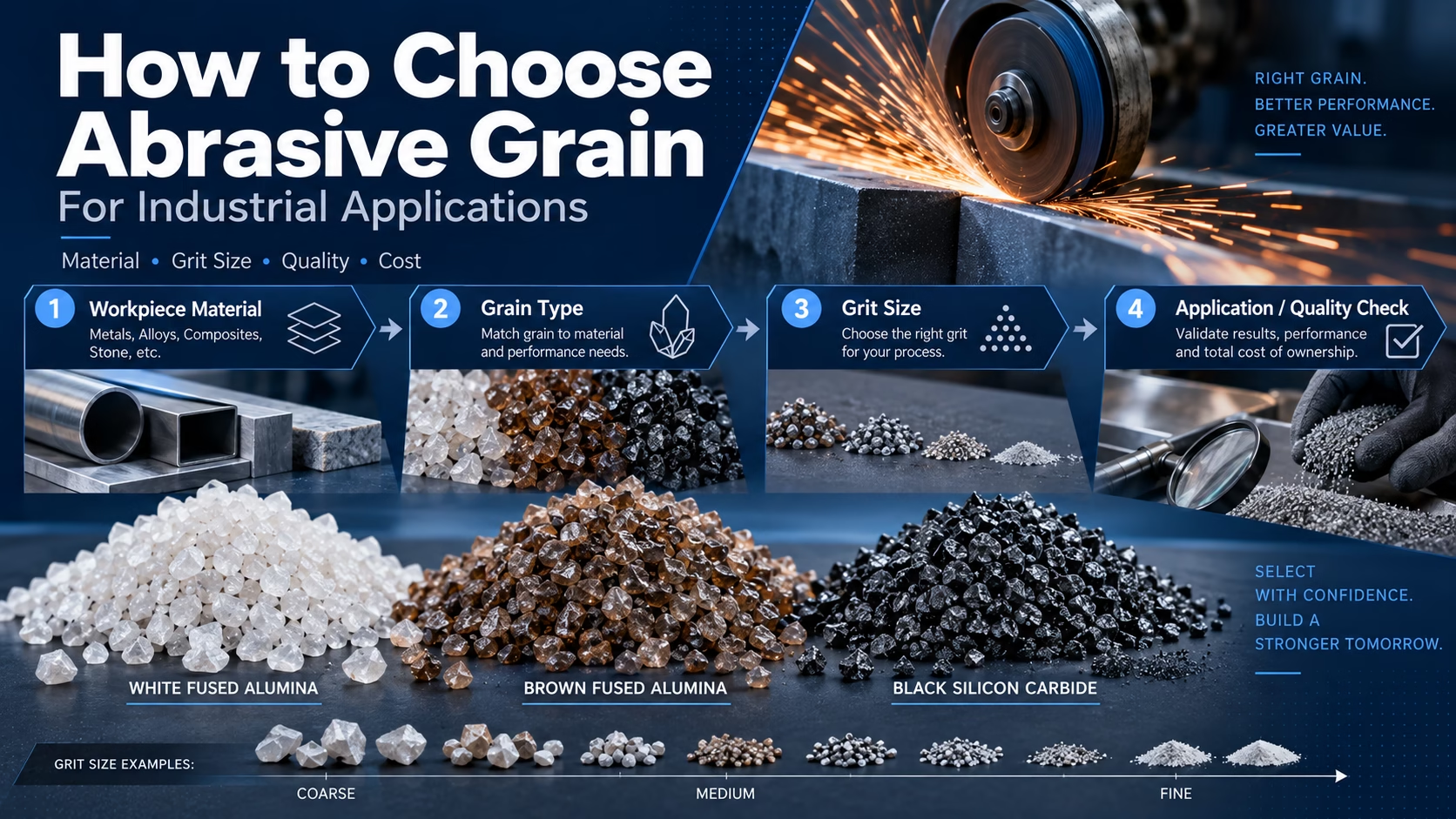
1. Choose the Right Abrasive Grain Material
Once the workpiece is understood, the next step is selecting an abrasive family.
For many conventional industrial applications, the comparison begins with aluminum oxide and silicon carbide before moving to zirconia, ceramic alumina or superabrasives for more demanding processes.
Aluminum Oxide
Aluminum oxide is one of the most widely used conventional abrasive materials because it combines hardness, 강인함, availability and relatively economical pricing. It is used across bonded abrasives, 코팅된 연마재, 연마, blasting and surface-finishing applications.
Within this family, however, several materials provide noticeably different cutting characteristics.
브라운 용융 알루미나
브라운 용융 알루미나 is normally chosen when toughness, durability and economical stock removal are important. It is widely used in grinding wheels, 코팅된 연마재, blasting media and refractory products.
For heavy grinding, general-purpose blasting or applications where the grain experiences substantial mechanical impact, brown fused alumina is often a practical material to test first. It can be supplied as conventional abrasive grit, powder, micro powder or coarse refractory aggregate, so buyers should make sure the form being quoted matches the intended process.
Brown fused alumina is particularly useful where grain toughness is more important than achieving the highest possible alumina purity. This is one reason it remains common in general metalworking, 디버링, surface preparation and refractory manufacturing.
흰색 융합 알루미나
White fused alumina is produced from high-purity alumina and is generally cleaner and more friable than brown fused alumina. These characteristics make it attractive when controlled cutting, lower contamination and a finer finish are more important than maximum toughness.
For buyers processing stainless steel, precision components or products where contamination is a concern, 흰색 융합 알루미나 may therefore be worth comparing with conventional brown fused alumina.
Purity should not be judged only by the headline Al₂O₃ percentage. Depending on the application, Na2O, Fe₂O₃, SiO2, magnetic material, bulk density and the chemistry of the exact grit being purchased may also influence performance.
Our White Fused Alumina Properties: A Complete Technical Guide looks more closely at hardness, 부서지기 쉬움, 청정, 입자 모양, particle-size distribution and other properties that industrial buyers may need to evaluate.
This is especially important when comparing suppliers. Two samples may both be sold as high-purity white fused alumina while producing different results because of classification accuracy, 나트륨 함량, oversized particles or grain morphology.
실리콘 카바이드
Silicon carbide is harder and generally sharper than conventional fused aluminum oxide, but it is also more brittle. This combination allows the grain to cut aggressively and fracture to expose new cutting edges.
It is commonly considered for:
- 유리
- 도예
- 결석
- 주철
- Carbide
- Selected non-ferrous materials
- 랩핑 및 폴리싱
- 내화물 응용
The important purchasing question is not whether silicon carbide is simply “better” than aluminum oxide. The better question is whether its sharpness and fracture behavior match the workpiece and process.
For many general industrial applications, 블랙 실리콘 카바이드 provides an economical option for grinding, 폭파, refractory and surface-processing applications.
녹색 실리콘 카바이드 is normally considered where higher purity and a sharp cutting action are required, including precision grinding, 세라믹, glass and hard-material applications.
If the abrasive is used under heavy mechanical impact and grain toughness matters more than sharpness, aluminum oxide may still provide better overall value. If the workpiece is hard and brittle and responds well to sharp cutting edges, silicon carbide may be the more appropriate material.
Zirconia Alumina and Ceramic Grain
Zirconia alumina and ceramic alumina are generally considered when productivity requirements become more demanding.
Zirconia alumina is tough and performs particularly well in heavy material removal when enough pressure is applied to encourage controlled grain fracture. Ceramic abrasive grains use more advanced microstructures that continually expose fresh cutting points during demanding grinding operations.
These materials usually cost more than standard fused aluminum oxide, so buyers should avoid selecting them based only on product reputation or theoretical cutting performance. A meaningful comparison should look at material removed, abrasive consumption, processing time and tool life.
A premium grain that costs substantially more per kilogram may still reduce the total processing cost if it cuts faster and lasts longer. Conversely, there is little reason to pay for premium ceramic grain when the application cannot take advantage of its performance.
Select Grit Size According to the Required Result
After grain material, grit size is usually the next major purchasing decision.
The general relationship is straightforward: lower grit numbers indicate coarser particles, while higher grit numbers indicate finer particles. Coarse grains generally remove material faster, whereas finer grains provide more controlled cutting and a smoother finish.
A practical starting point looks like this:
| 그릿 범위 | General Character | Typical Purchasing Objective |
|---|---|---|
| F12~F24 | 매우 거칠다 | Heavy stock removal, 공격적인 폭파 |
| F30~F46 | 조잡한 | 표면 준비, 거친 연삭 |
| F54~F80 | 중간 | 일반연삭, 폭파, balanced cutting |
| F90~F120 | 괜찮은 | 미세발파, controlled grinding |
| F150~F220 | 매우 좋음 | Fine grinding and finishing |
| 마이크로그리트 | Extremely fine | 랩핑, 세련, 정밀 마무리 |
These ranges are starting points rather than universal rules. Actual results also depend on abrasive material, 압력, 기계 속도, abrasive flow, equipment and required surface roughness.
예를 들어, F24 may remove heavy scale quickly during blasting, but the resulting surface profile may be too aggressive for the coating that follows. Moving to F60 or F80 can produce a more controlled profile, although cleaning speed may also decrease.
If you are comparing specific F-grit ranges, our 백색 알루미늄 산화물 입자 크기 선택 가이드 explains the differences between common grades such as F24, F36, F60, F80, F120 and F220 and how they relate to blasting, grinding and finishing.
One purchasing principle is especially useful: do not choose the finest abrasive possible. Choose the grit that achieves the required surface condition efficiently without adding unnecessary processing steps.
3. Confirm the Abrasive Standard
An order stating only:
“Aluminum oxide, 80 grit”
may still be incomplete.
Industrial abrasive grains can be classified according to FEPA, 안시, JIS and other national or customer-specific standards. The particle-size distribution behind a nominal grit number may therefore vary depending on the grading system being referenced.
FEPA distinguishes F-grits for bonded abrasive grains and P-grits for coated abrasive products. 이러한 이유로, F80 and P80 should not automatically be treated as the same specification.
A better RFQ would say:
백색 용융 알루미나 F80, FEPA 표준, 접착 연마재 생산용.
Or:
Brown Fused Alumina P80, FEPA 표준, for coated abrasive manufacturing.
If the material is intended for refractory production, conventional abrasive grit may not be the best way to specify it. Refractory buyers often request aggregate fractions such as 0–1 mm, 1–3 mm, 3–5 mm or 5–8 mm.
For this type of application, see Yumo’s Brown Fused Alumina Refractory Coarse Size / Segmented Sand specifications.
The supplier should know not only the particle size you need, but also how the material will be used.
4. Look Beyond the Grit Number
Two suppliers may both offer F80 white fused alumina, but that does not guarantee identical processing performance.
Several additional properties can affect the result.
Particle-Size Distribution
A nominal grit grade represents a controlled particle-size distribution rather than thousands of particles with exactly the same diameter.
For general grinding or blasting, small variations may be manageable. In precision lapping or polishing, however, excessive oversized particles can produce scratches significantly deeper than the intended finish.
Buyers working in fine finishing should therefore ask how particle size is tested and whether the specification includes oversize control.
Grain Shape
Angular grains usually provide more aggressive cutting because the applied force is concentrated on sharper edges. More blocky grains may offer greater mechanical durability.
For some applications, buyers deliberately specify grain shape rather than accepting a standard crushed material.
The correct choice depends on whether the process benefits more from:
날카로운 절단 + rapid fracture
또는:
내구성 + longer grain life
인성과 취약성
Abrasive grain needs to survive long enough to perform useful cutting, but a grain that never fractures is not necessarily desirable.
If the cutting edges gradually become rounded, grinding efficiency decreases. A more friable abrasive can fracture during use and expose new sharp surfaces.
This difference helps explain why white fused alumina and brown fused alumina should not be treated as interchangeable even though both belong to the aluminum oxide family.
Chemical Purity
Purity becomes particularly important in sensitive surface treatment, precision applications and certain refractory formulations.
Depending on the product, a buyer may need to evaluate:
- Al₂O₃
- Fe₂O₃
- SiO2
- Na2O
- TiO₂
- Magnetic impurities
The relevant indicators depend on the abrasive material and application. Request a Certificate of Analysis for the actual grade and particle size being quoted rather than assuming one general product specification represents every grit supplied by the manufacturer.
Match the Grain to the Application
Material and grit size should always be checked against the actual process. The same abrasive mineral can behave very differently depending on how it is used.
Grinding and Bonded Abrasives
연삭용, the abrasive grain cannot be evaluated in isolation. Bond type, wheel hardness, 구조, porosity, 작동 속도, coolant and grinding pressure can all influence performance.
Coarse grains normally support faster stock removal, while finer grains are used as surface-finish and dimensional requirements become more demanding.
If you manufacture bonded abrasives, give the grain supplier information about the grinding wheel, bond system and intended workpiece. Simply asking for “grinding wheel abrasive grain” leaves too many variables undefined.
샌드 블라스팅
폭파용, buyers usually need to balance cleaning rate against the surface profile left behind.
Coarse angular grains tend to clean aggressively and create a deeper profile. Finer particles provide more controlled surface treatment but can require additional blasting time when heavy contamination or coatings need to be removed.
The equipment also matters. Pressure, nozzle size, abrasive flow, blasting distance and recycling conditions can change how the same abrasive performs.
For stainless steel and other applications where unwanted contamination is a concern, higher-purity 흰색 융합 알루미나 is often worth evaluating against conventional blasting media.
코팅된 연마재
For sanding belts, discs and other coated abrasives, grain material is only one part of the finished abrasive product. Backing, 코팅 밀도, adhesive system and grain orientation can all affect cutting performance and loading behavior.
Standard aluminum oxide can be suitable for a broad range of general-purpose sanding, while zirconia and ceramic grains may justify their higher cost in more demanding metal-removal applications.
A purchasing team should test the grain under operating pressure and equipment conditions similar to the actual production process.
래핑 및 폴리싱
Fine finishing requires a different purchasing mindset.
At this stage, maximum hardness or cutting rate may be less important than:
- Particle-size consistency
- 특대 통제
- 청정
- Dispersion
- 표면 마무리
- Batch repeatability
A low-cost powder with a broad particle-size distribution can create more rework than a more expensive but tightly classified abrasive.
For precision processing, ask the supplier for particle-size distribution data instead of relying only on a general mesh designation.
Compare Total Processing Cost, Not Only Price per Ton
Industrial buyers naturally compare quotations, but abrasive purchasing becomes misleading when the decision is reduced to price per kilogram or price per ton.
Imagine that Supplier A offers an abrasive 10% cheaper than Supplier B. If Supplier A’s material wears faster, requires longer grinding time or produces inconsistent finish quality, the lower material price may actually increase overall production cost.
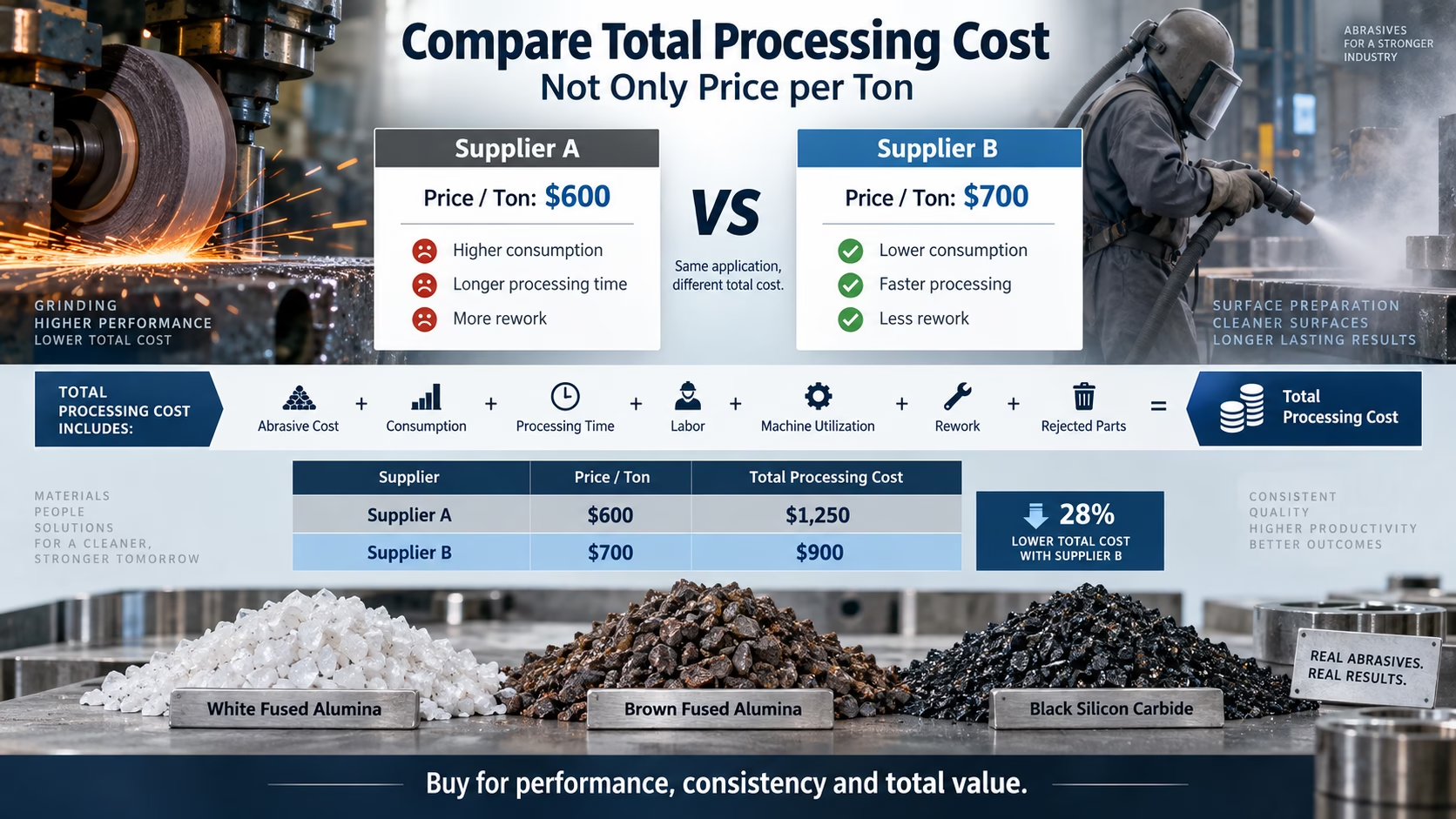
A more useful comparison is:
Abrasive cost + consumption + processing time + labor + machine utilization + rework + rejected parts
For blasting media, buyers can compare:
- Abrasive consumption per square meter
- Cleaning time
- 표면 프로필
- Dust generation
- Number of recycling cycles
- Final surface quality
For bonded and coated abrasives, the comparison may focus more heavily on cutting rate, abrasive life and material removed per tool.
A purchasing department can then compare suppliers using production results instead of quotation price alone.
Request a Sample Before a Large Order
For a new abrasive grade or supplier, production testing is one of the most effective ways to reduce purchasing risk.
A Certificate of Analysis confirms that selected parameters meet specification, but it cannot fully predict how the abrasive will behave in your equipment. Differences in grain shape, 부서지기 쉬움, particle-size distribution or operating conditions may only become clear during actual production.
A useful sample test should keep operating conditions as consistent as possible. Compare the proposed abrasive against your existing material using the same machine, 압력, workpiece and processing time.
Where relevant, record:
- Cutting or cleaning rate
- Surface roughness
- Abrasive consumption
- Tool life
- Dust generation
- Heat generation
- Reject rate
- Finish consistency
Only after the sample produces an acceptable process result should the buyer consider a larger trial shipment or routine purchasing.
How to Evaluate an Abrasive Grain Supplier
A reliable abrasive supplier should be able to discuss more than price and availability.
Technical documentation is one of the first things to check. At minimum, many industrial buyers require a Technical Data Sheet and Certificate of Analysis. More demanding applications may also require particle-size data, magnetic-content reports or other quality documentation.
The quotation should clearly identify the grading standard. FEPA F, FEPA P, 그, ANSI and mesh specifications should not be mixed without explanation.
Batch consistency is another important consideration. Ask how the manufacturer controls particle classification, chemistry and impurities between production lots. Stable incoming material reduces the need to continually adjust blasting pressure, grinding parameters or processing time.
Sample support is equally valuable. A supplier confident in its specification should normally be prepared to discuss product testing before a major order.
Yumo’s Brown Fused Alumina product range, for example, includes coarse sizes, abrasive grain and fine powder options for different applications rather than presenting one specification as suitable for every process.
Finally, look at the quality of the technical conversation itself. A useful recommendation should begin with questions about your workpiece, application, grit requirement, current abrasive and required finish.
최종 생각
Choosing abrasive grain for an industrial application is ultimately a process-matching exercise. The correct decision starts with the workpiece and required result, then moves through grain material, 입자 크기, grading standard, particle characteristics and supplier quality control.
For many buyers, aluminum oxide and silicon carbide provide the first comparison point. 브라운 융합 알루미나 provides toughness and economical performance for many general grinding and blasting applications, while 흰색 융합 알루미나 becomes attractive when purity, controlled fracture and cleaner processing are priorities. Silicon carbide provides a harder and sharper alternative for many hard, brittle and non-metallic materials.
대량 주문을 하기 전에, confirm the grading standard, review the technical specification and COA, and test the material under production conditions. The best abrasive grain is rarely the cheapest material on the quotation sheet or simply the hardest mineral available. It is the material that consistently achieves the required result at the lowest practical overall processing cost.
For readers who want to understand the fundamentals before comparing specific materials and suppliers, continue with 연마 입자 란 무엇입니까?? 유형, 크기 & 응용.


2 응답