
How to Choose a Synthetic Abrasive Materials Manufacturer
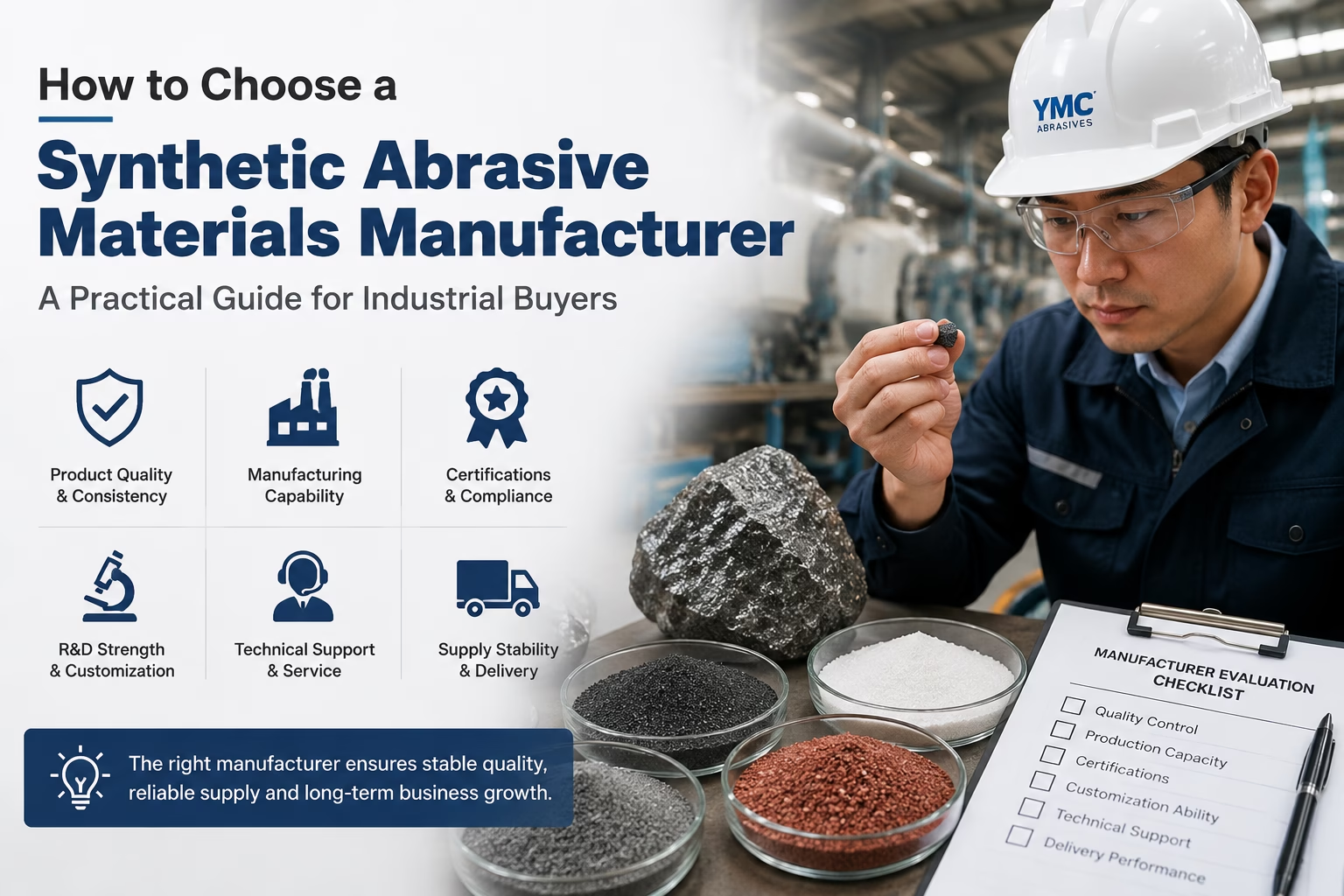
Choosing a synthetic abrasive materials manufacturer is not simply a price comparison. The supplier must understand the material, particle-size standard, end-use process and quality risks behind your order. A low unit price can become expensive when inconsistent grit distribution, excessive fines, contamination or weak packaging causes production loss.
This guide explains how industrial buyers can qualify manufacturers of white fused alumina, brown fused alumina, black silicon carbide and green silicon carbide before placing a bulk order.
What Are Synthetic Abrasive Materials?
Synthetic abrasives are engineered mineral materials produced under controlled industrial conditions. Unlike natural abrasives, their chemistry, crystal structure and particle-size distribution can be adjusted for specific grinding, blasting, refractory, lapping and polishing applications.
Common synthetic abrasive raw materials include:
- White fused alumina: high-purity, hard and friable aluminum oxide for precision grinding, blasting, refractory and surface-finishing applications.
- Brown fused alumina: tough aluminum oxide used in bonded abrasives, coated abrasives, blasting and refractory products.
- Black silicon carbide: sharp, hard and cost-effective SiC for grinding, blasting, stone processing and refractory use.
- Green silicon carbide: higher-purity, sharper and more friable SiC for precision grinding, lapping and fine polishing.
The correct choice depends on the workpiece, removal rate, finish target, bonding system and production equipment. See our comparison of white fused alumina vs brown fused alumina for one common selection decision.
Manufacturer, Processor or Trading Company?
In abrasive raw materials, the word manufacturer may describe different capabilities. One company may operate an electric-arc furnace, another may crush and grade purchased blocks, and another may source finished grain from partner factories. None of these models is automatically unsuitable, but the supplier should explain its role accurately.
Ask which production stages are controlled directly:
- raw-material selection and fusion;
- crushing and shaping;
- magnetic separation and impurity removal;
- sieving, air classification or water classification;
- blending and lot homogenization;
- laboratory testing;
- packing, labeling and export documentation.
A capable processor with strong classification and quality control may be more suitable for a precision powder order than a large smelter with limited fine-powder control.
Eight Criteria for Qualifying a Supplier
1. Application Understanding
A reliable supplier asks what the material will do, not only which grit number appears on the inquiry. Sandblasting, grinding wheels, coated abrasives, refractory castables and lapping compounds require different particle shapes, chemistry and tolerances.
2. Clear Grade and Size Standards
Specify whether the order follows FEPA F, FEPA P, JIS, ANSI, GB, mesh or a micron distribution. Similar size labels can represent different distributions under different standards. The quotation and certificate should use the same standard.
3. Relevant Test Capability
Depending on the product, request chemical composition, particle-size distribution, bulk density, magnetic material, moisture and oversize/undersize results. For micron powders, D10, D50 and D90 data may be more useful than a nominal label alone.
4. Lot Traceability
Each shipment should be traceable to a production or packing lot. Ask how retained samples, test records and labels are linked. Traceability makes complaints faster to investigate and helps prevent mixed-lot uncertainty.
5. Sample-to-Bulk Consistency
A good sample is only useful if bulk production follows the same specification. Confirm whether the approval sample is a representative production sample, how long it remains valid and which changes require buyer approval.
6. Packaging Control
Fine abrasive powders are sensitive to moisture, leakage and contamination. Confirm inner liners, valve or sewn bags, pallet protection, labels and container loading method. Packaging should match transport distance and local handling conditions.
7. Document Accuracy
Before shipment, agree on the required COA, TDS, SDS, packing list, commercial invoice, certificate of origin and labeling language. A supplier should distinguish test results from typical product data.
8. Technical Communication
Fast replies are useful, but accurate replies matter more. The sales team should be able to involve a technical or quality colleague when specifications fall outside a standard grade.
Build a Specification Before Requesting Price
An effective RFQ should include:
- material and color;
- application and workpiece;
- grit or micron standard;
- required chemistry and physical limits;
- particle shape or bulk-density preference;
- quantity per order and annual demand;
- packaging and label requirements;
- destination port and Incoterm;
- documents and sample quantity required.
Without this information, quotations from different suppliers may not describe equivalent products. A detailed RFQ makes technical and commercial comparison much more reliable.
How to Approve a New Abrasive Material
- Document review: compare the TDS, sample COA and supplier questionnaire with your specification.
- Laboratory check: verify critical chemistry and particle-size properties where possible.
- Production trial: test cutting rate, finish, consumption, dust, bonding behavior or refractory performance in the real process.
- Pilot order: confirm bulk consistency, packaging and documentation before increasing volume.
- Performance review: monitor more than one lot and keep a reference sample.
Common Warning Signs
- The quotation gives a grit label but no standard.
- Every requested specification is accepted without technical review.
- The COA shows only typical values rather than lot results.
- The supplier cannot explain its production role.
- The bulk material differs visibly from the approved sample.
- Packaging and labels change without notice.
- Claims about purity, certificates or capacity cannot be documented.
Questions to Send a Potential Manufacturer
Ask the supplier to answer the same questions in writing so each candidate can be compared consistently:
- Which production steps do you control directly?
- Which size standards and products are routine for your plant?
- Which tests are performed for every lot?
- Can you supply a representative sample with a sample COA?
- How are nonconforming lots isolated and investigated?
- What are the normal MOQ, lead time and packaging options?
- Can you maintain an agreed specification across repeat orders?
Request a Technical Review from Yumo
Henan Yumo supplies fused alumina and industrial silicon carbide materials for abrasive, blasting, refractory, lapping and polishing applications. Send your application, required standard, target size, chemistry limits, quantity and destination to our team.
Contact Yumo for a specification review, sample discussion and quotation. We will confirm the proposed grade and test items before a bulk order is discussed.


