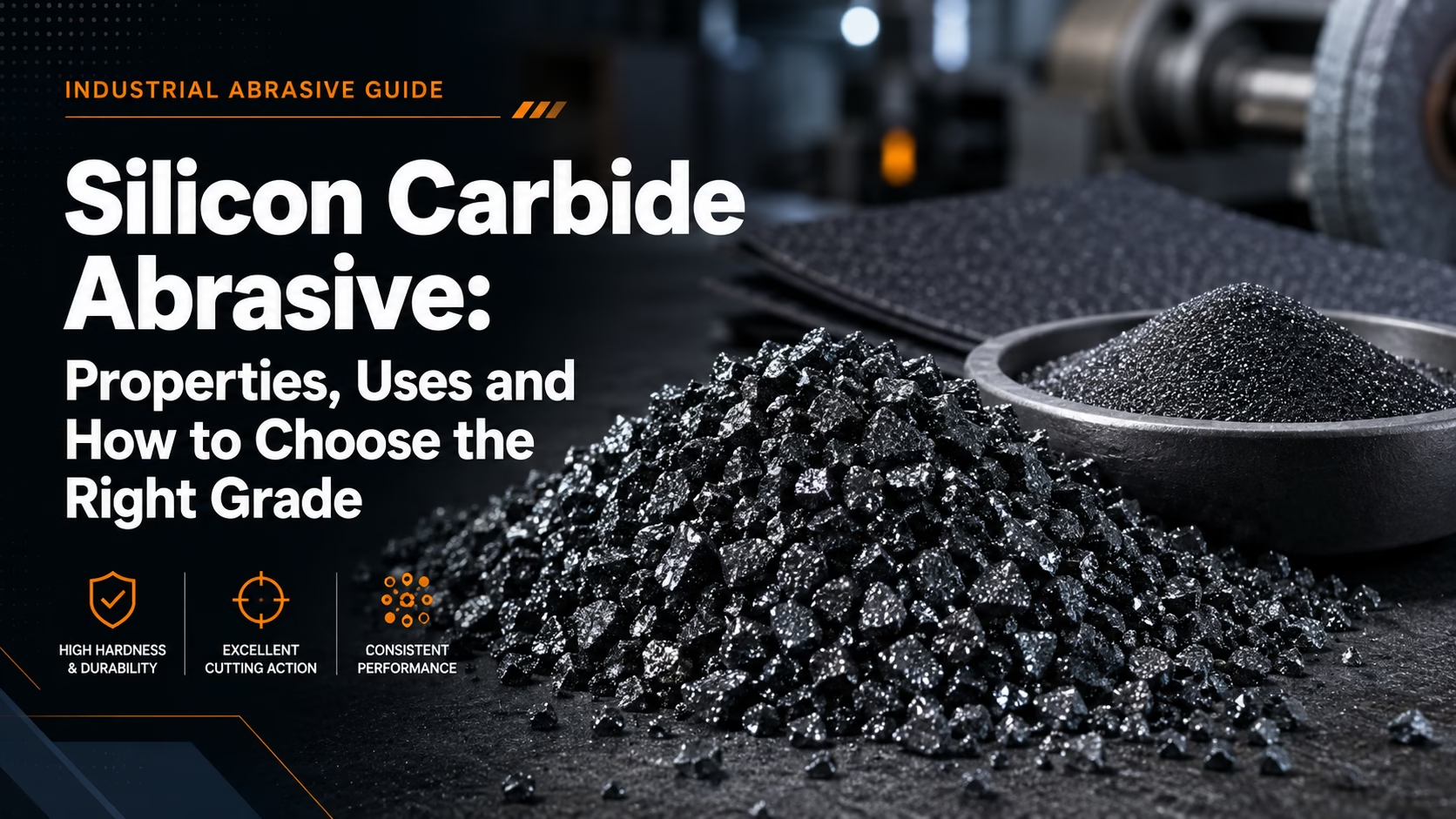
碳化硅磨料: 特性, 用途及购买指南

– 单帖

碳化硅磨料: 特性, Uses and Industrial Buying Guide

This guide covers abrasive-grade and refractory-grade silicon carbide grains. It does not describe semiconductor SiC crystals or wafers.

快速解答: 什么是碳化硅磨料?

碳化硅磨料是一种硬质磨料, 锋利的, 磨削用合成磨料, 切割, 爆破, 研磨, 抛光, 和表面处理. It is known for high hardness, sharp cutting ability, 耐磨性好, thermal stability, and strong performance on hard or brittle materials.

In practical use, silicon carbide abrasive is often selected for:

  • Glass grinding and edge finishing
  • Stone, 大理石, and ceramic polishing
  • Plastic and fiberglass sanding
  • Non-ferrous metal finishing
  • Sandblasting and surface cleaning
  • Wet sanding and coated abrasive products
  • Grinding wheels and bonded abrasives
  • Precision lapping and polishing

Compared with aluminum oxide, silicon carbide is usually sharper and cuts faster, but it is more brittle. That makes it especially useful when the application requires a clean, sharp cut or a fine surface finish rather than heavy-pressure grinding.

碳化硅磨料性能, 用途及购买指南

什么是碳化硅磨料?

Silicon carbide abrasive, also called SiC abrasive 或者 carborundum abrasive, is made from silicon carbide grains. Silicon carbide is a compound of silicon and carbon. In abrasive production, it is usually manufactured in an electric resistance furnace, 然后压碎, graded, classified, and processed into different grit sizes and powder forms.

The abrasive grain has a very hard and sharp crystal structure. This sharpness allows it to cut into hard surfaces with less pressure. Because of this, silicon carbide is widely used in industries that need efficient material removal, controlled surface finishing, or precision polishing.

Silicon carbide abrasive can be supplied in several forms, including:

  • Macro grits
  • Micro powders
  • Sandblasting media
  • Coated abrasive grains
  • Bonded abrasive grains
  • Lapping powder
  • Polishing powder
  • Refractory-grade silicon carbide
  • Ceramic and technical material grades

For abrasive applications, the most common types are 黑碳化硅绿碳化硅.

Key Properties of Silicon Carbide Abrasive

Silicon carbide abrasive is valued because it combines hardness, 清晰度, 耐热性, 和化学稳定性. These properties allow it to perform well in many demanding industrial applications.

财产Why It Matters in Abrasive Applications
高硬度Helps cut hard materials such as glass, 石头, 陶瓷, and certain metals
Sharp grain shapeProvides fast cutting and efficient surface removal
Brittle fracture behaviorHelps expose new sharp edges during some finishing operations
良好的热稳定性Useful in high-friction grinding and heat-related applications
Wear resistanceSupports consistent abrasive performance
化学稳定性Helps maintain cleaner processing in polishing and surface treatment
Available in many grit sizesSuitable for rough grinding, fine sanding, 研磨, and polishing

In real production, the performance of silicon carbide abrasive depends not only on the material itself, but also on grain size, 纯度, 颗粒形状, 韧性, backing material, bonding system, and the pressure used during grinding or sanding.

黑碳化硅与绿碳化硅

The two most common types of silicon carbide abrasive are 黑碳化硅绿碳化硅. They are similar in chemical nature, but they are used differently.

TypeMain FeaturesCommon Uses
黑碳化硅Hard, 锋利的, cost-effective, slightly tougher than green silicon carbideStone grinding, 玻璃加工, 爆破, 耐火材料, non-ferrous metal finishing, 涂附磨具
绿碳化硅Higher purity, sharper, more friable, often used for precision workCarbide tools, 陶瓷, 玻璃, 光学玻璃, precision grinding, 研磨, 抛光

Black Silicon Carbide Abrasive

Black silicon carbide abrasive is widely used because it offers a good balance of cutting ability and cost performance. It is commonly selected for grinding and polishing hard or brittle materials, as well as for blasting and refractory-related applications.

Common applications include:

  • Stone grinding
  • Marble polishing
  • Glass processing
  • Ceramic surface finishing
  • 喷砂
  • Grinding wheels
  • 涂附磨具
  • Non-ferrous metal finishing
  • Refractory material production

For many industrial buyers, black silicon carbide is the practical choice when the application needs strong cutting performance and stable supply at a reasonable cost.

Green Silicon Carbide Abrasive

Green silicon carbide abrasive is generally higher in purity and more friable than black silicon carbide. It is often selected for applications that require sharper cutting, cleaner finishing, or more controlled precision grinding.

Common applications include:

  • Cemented carbide grinding
  • Ceramic grinding
  • Optical glass finishing
  • Precision lapping
  • Fine polishing
  • Hard alloy tools
  • Semiconductor-related polishing processes
  • Technical ceramic finishing

Green silicon carbide is often used when surface accuracy, sharp cutting, and material purity are more important than cost.

Common Uses of Silicon Carbide Abrasive

Silicon carbide abrasive is used across many industries because it performs well on hard, brittle, and difficult-to-finish materials.

1. Grinding and Cutting

Silicon carbide abrasive can be used in grinding wheels, cutting wheels, and bonded abrasives. It is especially suitable for materials that are hard, brittle, or sensitive to heavy pressure.

Typical materials include:

  • 玻璃
  • 陶瓷
  • Stone
  • Cast iron
  • Non-ferrous metals
  • Carbide materials
  • Hard coatings

Because silicon carbide cuts sharply, it can help reduce grinding force in certain applications.

2. Sandblasting and Surface Preparation

Silicon carbide is one of the hardest blasting media commonly used in industrial surface treatment. It can quickly remove rust, scale, old coatings, burrs, and surface contamination.

It is used for:

  • Surface cleaning
  • Etching
  • Deburring
  • Coating preparation
  • Mold cleaning
  • Stone texturing
  • Metal surface roughening

For blasting, black silicon carbide is often selected because it combines hardness, cutting power, and cost performance.

3. Wet Sanding and Coated Abrasives

Silicon carbide abrasive is widely used in waterproof sandpaper and coated abrasives. It is especially popular for wet sanding because the sharp grains can create a smooth and even finish.

Common wet sanding applications include:

  • Automotive primer sanding
  • Automotive clear coat finishing
  • Plastic sanding
  • Fiberglass finishing
  • Glass edge smoothing
  • Paint defect correction
  • Fine surface preparation before polishing

In coated abrasives, silicon carbide is often used when users need sharp cutting and fine finishing rather than long heavy-duty sanding life.

4. 研磨和抛光

Fine silicon carbide powder is often used for lapping and polishing applications. It can help achieve controlled surface removal and a smoother finish on hard materials.

Typical applications include:

  • Ceramic lapping
  • Mechanical seal polishing
  • Glass polishing
  • Stone polishing
  • Optical component finishing
  • Hard alloy polishing
  • Technical ceramic finishing

The final result depends heavily on particle size distribution, suspension method, 工件材料, 压力, and polishing time.

5. Refractory and High-Temperature Materials

Silicon carbide is also used in refractory materials because of its heat resistance, thermal stability, and wear resistance. In this field, it may be used in bricks, 浇注料, kiln furniture, 炉衬, and high-temperature components.

Common refractory-related uses include:

  • Kiln furniture
  • Furnace linings
  • Refractory castables
  • Wear-resistant refractory products
  • High-temperature structural parts

For this application, buyers usually focus on chemical composition, 粒度分布, oxidation resistance, and thermal performance.

Which Materials Can Silicon Carbide Abrasive Work On?

Silicon carbide abrasive is especially suitable for hard, brittle, or non-ferrous materials.

MaterialSuitabilityCommon Process
玻璃Excellent磨削, edge finishing, 抛光
StoneExcellent磨削, 抛光, texturing
MarbleExcellentPolishing and surface finishing
CeramicExcellent磨削, 研磨, 抛光
PlasticGoodWet sanding and fine finishing
FiberglassGoodSanding and surface smoothing
Cast ironGoodGrinding and surface preparation
AluminumGoodFinishing and preparation
Brass / 铜GoodNon-ferrous metal finishing
SteelLimited for some applicationsCan be used, but aluminum oxide may be more durable for general steel sanding
WoodNot usually first choiceAluminum oxide is usually better for raw wood sanding

In simple terms, silicon carbide abrasive is often the better choice when the workpiece is hard, brittle, coated, or needs a fine finish.

Silicon Carbide Abrasive vs Aluminum Oxide Abrasive

碳化硅 and aluminum oxide are both common abrasive materials, but they perform differently.

Comparison碳化硅磨料Aluminum Oxide Abrasive
Cutting styleSharper, faster initial cutTougher, more durable cut
Grain toughnessMore brittleTougher
Best for玻璃, 石头, 陶瓷, 塑料, wet sandingWood, 钢, general metal, heavy sanding
Finish qualityGood for fine finishingGood for general surface preparation
Lifespan under pressureUsually shorterUsually longer
Common useFinishing, 抛光, hard materialsGeneral sanding and grinding

Choose silicon carbide abrasive when you need sharp cutting, wet sanding, or finishing on hard materials.
Choose aluminum oxide abrasive when you need longer life, general sanding, wood sanding, or steel surface preparation.

Silicon Carbide Grit Size Guide

Choosing the right grit size is just as important as choosing the right abrasive material. Coarse grits remove material quickly, while fine grits produce smoother finishes.

Grit RangeCommon Use
Coarse gritHeavy grinding, 爆破, rough surface removal
Medium grit普通磨削, 成型, 表面处理
Fine gritSmoothing, sanding, finishing
Micro powderLapping, 抛光, precision finishing

例如:

  • Coarse silicon carbide grit is often used for blasting, rough grinding, and stone processing.
  • Medium grit is suitable for general grinding and surface preparation.
  • Fine grit is used for sanding, smoothing, and pre-polishing.
  • Silicon carbide micro powder is used for lapping, 抛光, and precision finishing.

Industrial buyers should confirm whether the required standard is FEPA, 他, ANSI, or micron-based particle size. Different standards may use different grit designations, so it is important to confirm particle size before placing bulk orders.

How to Choose the Right Silicon Carbide Abrasive

When selecting silicon carbide abrasive, do not look only at price. The correct grade depends on the material, process, equipment, and final surface requirement.

Before buying, confirm these points:

  1. 应用
  • Are you using the abrasive for grinding, 爆破, 涂附磨具, 固结磨具, 研磨, 抛光, or refractory materials?
  1. Material to Be Processed
  • Silicon carbide works especially well on glass, 石头, 陶瓷, 塑料, fiberglass, 铸铁, and non-ferrous metals.
  1. Black or Green Silicon Carbide
  • Choose black silicon carbide for general grinding, 爆破, stone processing, 耐火材料, and cost-effective applications. Choose green silicon carbide for higher purity, precision grinding, hard alloy tools, 陶瓷, and polishing.
  1. Grit Size or Particle Size
  • Coarse grit is used for fast removal. Fine grit and micro powder are used for smooth finishing and polishing.
  1. Purity and Chemical Composition
  • For precision polishing, 陶瓷, and refractory uses, chemical composition and impurity levels may affect performance.
  1. 颗粒形状
  • 锋利的, angular grains usually cut faster. More controlled particle shapes may be required for precision finishing.
  1. Packaging
  • Common options include small bags, 25 公斤袋, jumbo bags, and customized packaging for distributors or factories.
  1. Sample Testing
  • For industrial buyers, sample testing is recommended before bulk purchasing. Testing helps confirm cutting rate, finish quality, grit consistency, and product compatibility with the production process.

Industrial Buyer Checklist

For B2B buyers, the best silicon carbide abrasive supplier should be able to provide stable quality, consistent particle size, suitable packaging, and technical support.

Before confirming an order, ask the supplier for:

  • Product type: black silicon carbide or green silicon carbide
  • Grit size or micron size
  • 化学成分
  • 粒径分布
  • Application recommendation
  • Available packaging
  • Sample availability
  • Lead time
  • Quality control process
  • Export experience
  • Custom grading capability

A reliable supplier should not only provide abrasive grains, but also help buyers choose the correct grade according to real working conditions.

Common Mistakes When Choosing Silicon Carbide Abrasive

Mistake 1: Choosing Only by Hardness

Hardness is important, but it is not the only factor. Grain toughness, 粒径, 形状, 纯度, and bonding system also affect performance.

Mistake 2: Using Silicon Carbide for Every Material

Silicon carbide is excellent for hard and brittle materials, but it is not always the best choice for wood or general steel sanding. In those cases, aluminum oxide may be more durable and economical.

Mistake 3: Ignoring Grit Standards

喂养, 他, ANSI, and micron sizes are not always the same. Buyers should confirm the actual particle size distribution before purchasing.

Mistake 4: Skipping Sample Testing

Abrasive performance can change depending on machine speed, 压力, coolant, 工件材料, and finishing requirements. Sample testing helps reduce purchasing risk.

Final Recommendation

Silicon carbide abrasive is a strong choice when you need a hard, 锋利的, and efficient abrasive for grinding, 爆破, wet sanding, 研磨, 抛光, and hard material finishing.

Choose 黑碳化硅 for general abrasive use, stone processing, glass grinding, 爆破, 耐火材料, and cost-effective industrial applications.

Choose 绿碳化硅 for higher-purity applications, precision grinding, 陶瓷, 光学玻璃, hard alloy tools, 研磨, and fine polishing.

If your work requires sharp cutting, fine finishing, or processing hard and brittle materials, silicon carbide abrasive is often the right choice. If your work requires heavy sanding on wood or general steel, aluminum oxide may be more practical.

The best choice depends on your material, grit size, process, and final surface requirement.

FAQ About Silicon Carbide Abrasive

What is silicon carbide abrasive used for?

Silicon carbide abrasive is used for grinding, 切割, 爆破, wet sanding, 研磨, 抛光, 和表面处理. It is commonly used on glass, 石头, 陶瓷, 塑料, fiberglass, 铸铁, and non-ferrous metals.

Is silicon carbide a good abrasive?

是的. Silicon carbide is a good abrasive because it is very hard and sharp. It cuts quickly and works well on hard, brittle, and smooth surfaces.

What is the difference between black silicon carbide and green silicon carbide?

Black silicon carbide is more commonly used for general grinding, 爆破, stone processing, 玻璃加工, and refractory materials. Green silicon carbide is usually higher in purity and is often used for precision grinding, 陶瓷, 光学玻璃, hard alloy tools, 研磨, and polishing.

Is silicon carbide abrasive better than aluminum oxide?

Silicon carbide is better for sharp cutting, wet sanding, 玻璃, 石头, 陶瓷, 塑料, and fine finishing. Aluminum oxide is usually better for wood, 钢, general sanding, and applications that require longer abrasive life under pressure.

Can silicon carbide abrasive be used on metal?

是的, silicon carbide abrasive can be used on some metals, especially cast iron and non-ferrous metals such as aluminum, brass, and copper. For general steel sanding, aluminum oxide is often more durable.

Can silicon carbide abrasive be used for wood?

It can be used on some coated wood surfaces, 画, lacquer, or finish layers, but it is not usually the first choice for raw wood sanding. Aluminum oxide is normally better for woodworking.

Why is silicon carbide used for wet sanding?

Silicon carbide is sharp and works well in fine grit forms. In wet sanding, water helps reduce heat, carry away sanding dust, and produce a smoother finish.

What grit size silicon carbide should I choose?

Choose coarse grit for fast removal and blasting, medium grit for general grinding, fine grit for sanding and finishing, and micro powder for lapping and polishing. The best grit depends on the material and required surface finish.

Is silicon carbide abrasive suitable for glass polishing?

是的. Silicon carbide abrasive is widely used for glass grinding, glass edge finishing, and some polishing processes because it is hard and sharp.

How should industrial buyers choose a silicon carbide abrasive supplier?

Industrial buyers should look for stable particle size, reliable quality control, suitable packaging, export experience, sample availability, and technical support. A good supplier should help match the abrasive grade to the buyer’s actual application.

作者

作者: 百合
审阅者: 河南雨墨新材料技术团队

百合 主要撰写涵盖碳化硅的实用指南, 电熔刚玉, 磨粒, 抛光材料, 和工业表面处理工艺. 所有内容均经过技术审查 河南雨墨新材料有限公司, 有限公司. 旨在帮助买家选择最适合研磨的磨料产品, 抛光, 喷砂, 耐火材料应用, 以及各种制造工艺.

最新消息

白刚玉性能: 完整的技术指南

白刚玉的特性使这种合成矿物成为精密研磨的首选原材料, 喷砂, 抛光, 固结磨具, 先进陶瓷及高温耐火材料

如何选择合成磨料制造商

实用的 B2B 指南,帮助您确定熔融氧化铝和碳化硅合成磨料制造商的资格, 从规格和样品到质量控制和交付.

分享这个 :

发表回复

您的邮箱地址不会被公开。 必填项已用 * 标注

接触